

How to Design a Restorative Living Room, According to the WELL Building Standard
Most people decorate their living rooms. Far fewer design them — and there's a meaningful difference between the two.
Decorating is about how a space looks. Designing is about how a space works — how it makes you feel when you walk in after a long day, whether it helps your body decompress or quietly keeps it on edge, whether it supports the full range of how you actually live in it.
The WELL Building Standard is a performance-based framework — backed by physicians, scientists, and researchers — that measures how the built environment directly impacts human health. While it was pioneered in commercial spaces, its principles translate powerfully to the home. Especially the living room, which asks more of a single room than almost any other: rest, connection, focus, play, and recovery — often all in the same day.
Here's how to design a living room that doesn't just look beautiful, but actively restores the body living inside it.
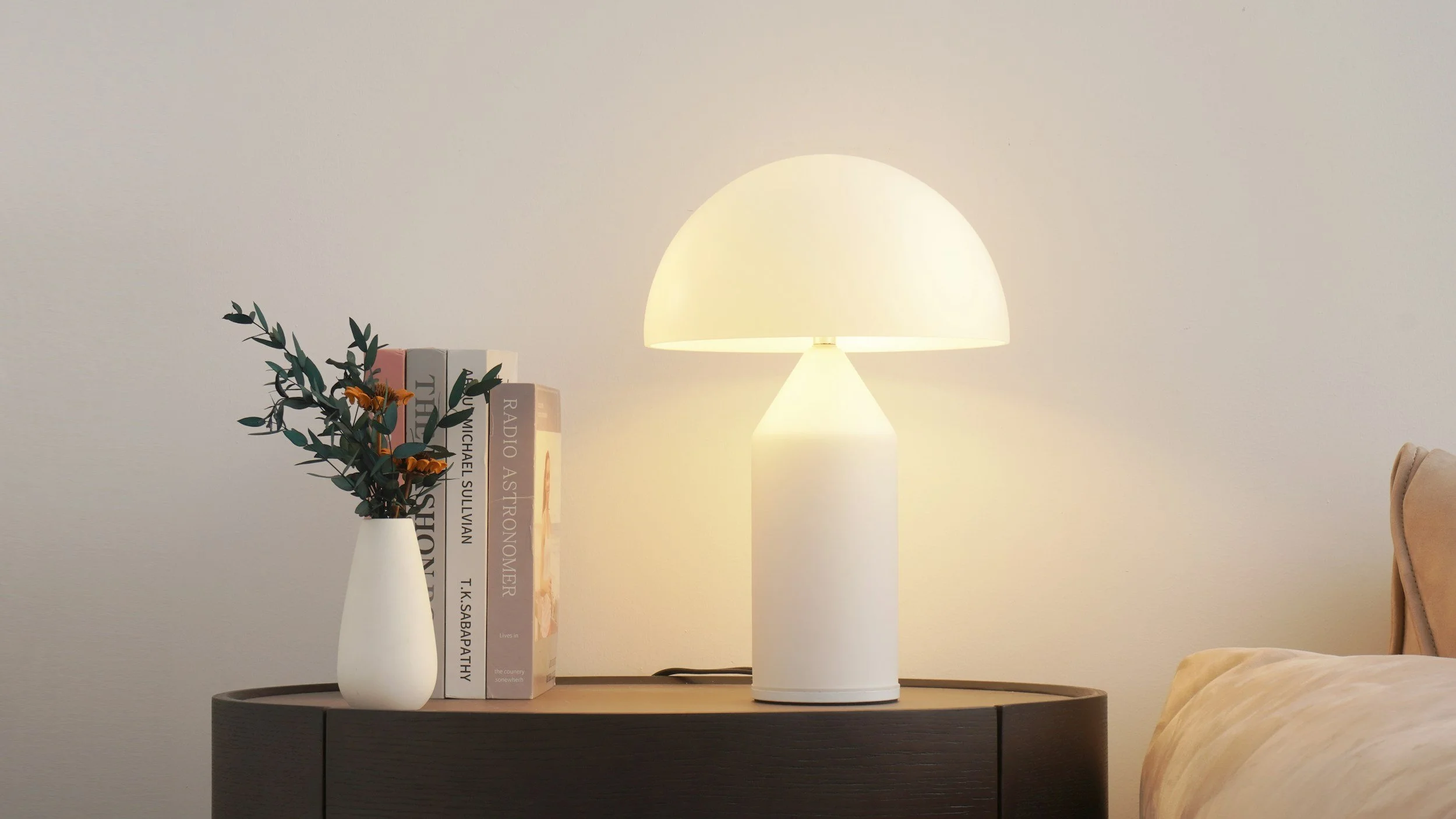
1. Start with Light — and Make It Adjustable
Light is the single most powerful environmental signal your nervous system receives. It regulates your circadian rhythm, affects your cortisol levels, and either primes your body for alertness or tells it to wind down. The WELL Building Standard treats lighting as a precondition, not a preference — and your living room should too.
The key is layering. A living room that relies on a single overhead fixture is working against you at every hour except one. Instead, design for three light sources: ambient (the base layer), task (reading, working), and accent (warmth, atmosphere). Pair that with dimmer controls and you've given yourself a room that can shift from energizing mid-morning light to a soft, low-stimulation environment by evening — following your body's natural rhythm rather than fighting it.
Warm-toned bulbs (2700–3000K) support evening wind-down. If your room receives good natural light, treat that as your anchor and let your artificial layers support it rather than compete with it.
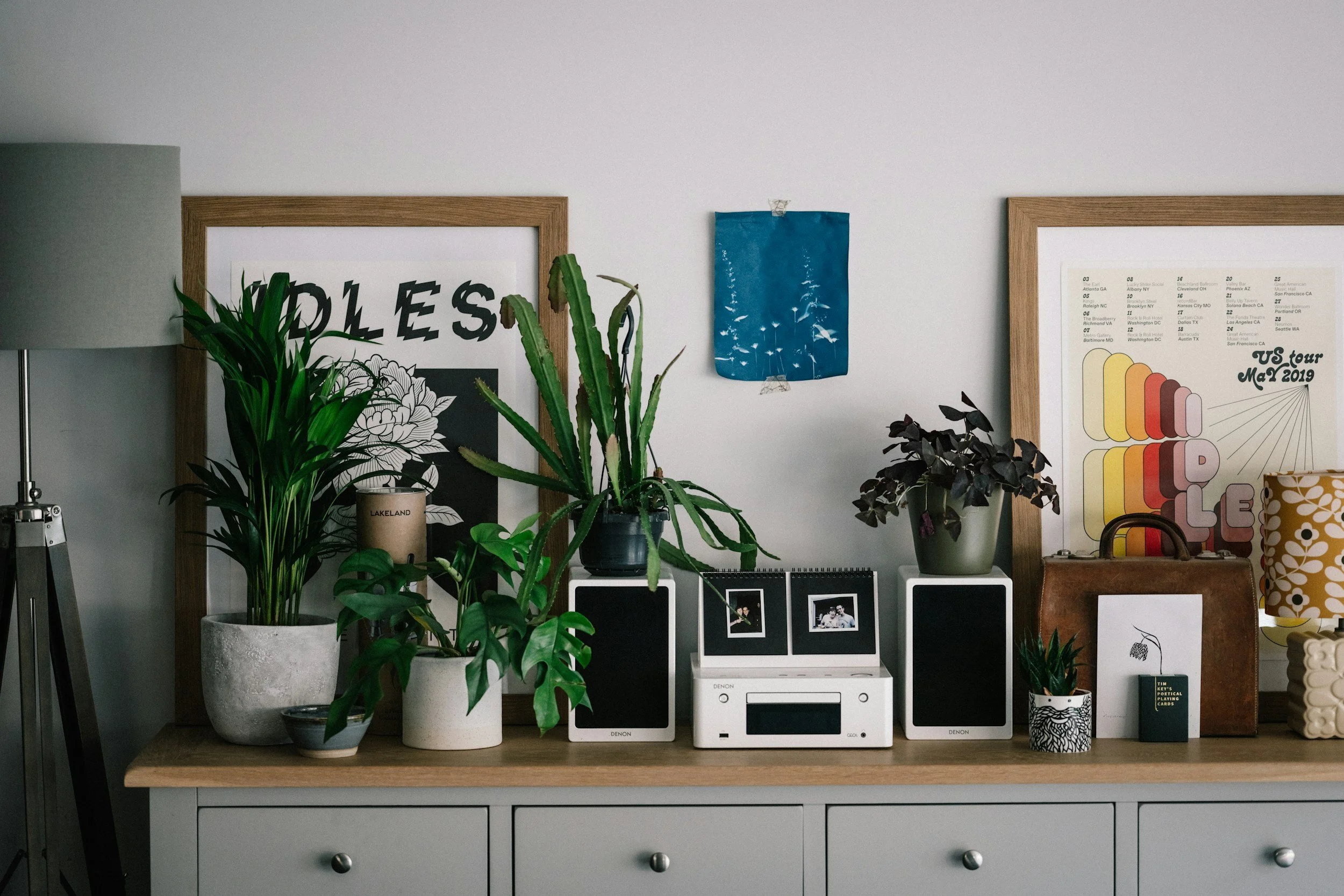
2. Bring the Outside In — Views of Nature and Natural Elements
The WELL Standard's biophilia features are grounded in a simple truth: humans evolved in nature, not inside it. Our nervous systems are still calibrated to respond to natural environments — which is why even a view of trees through a window has been shown to reduce stress and lower blood pressure.
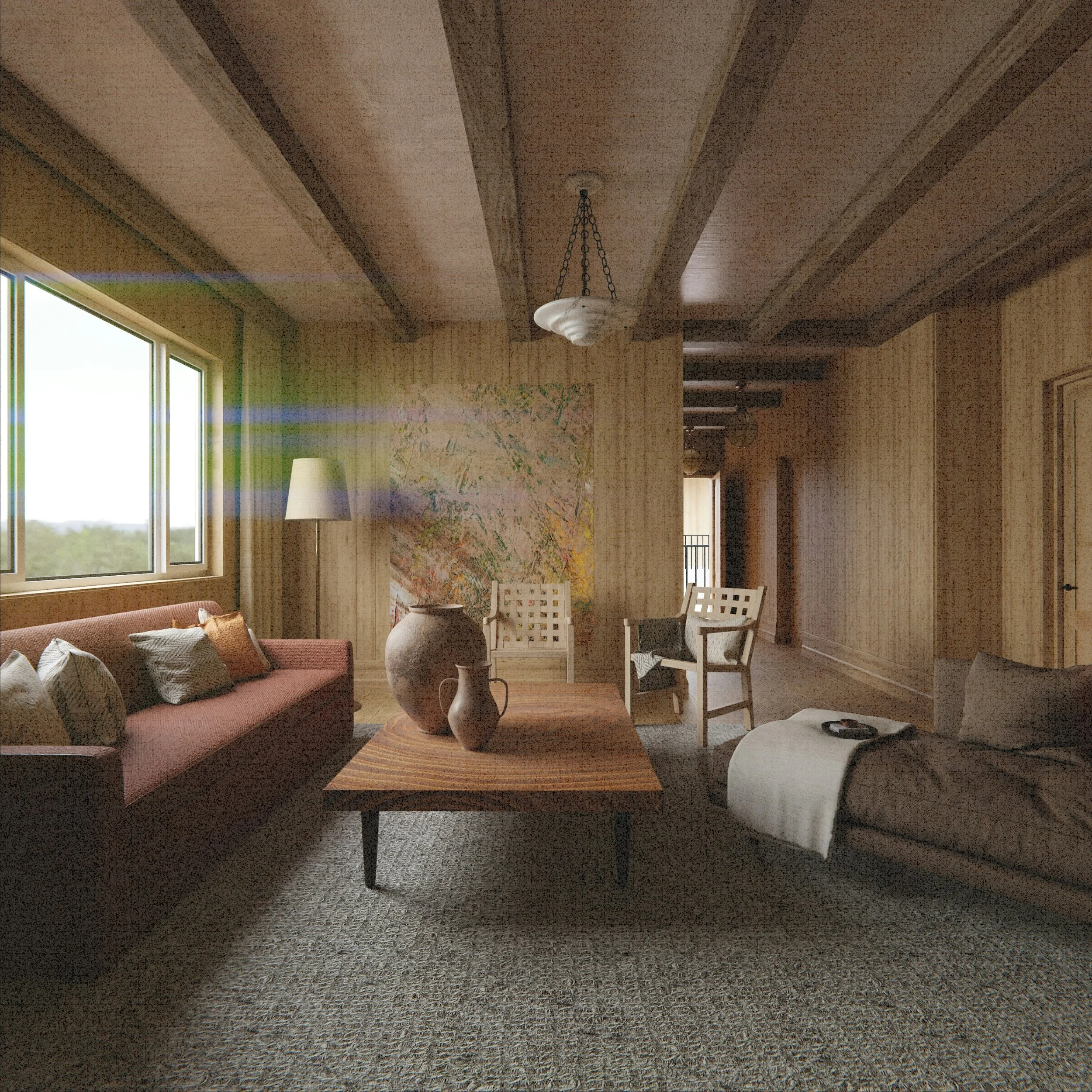
In your living room, prioritize sightlines to any natural view you have access to. Orient seating toward windows rather than away from them. Where direct views aren't possible, bring nature inside through living walls, large-format plants, stone and wood surfaces, water features, or even high-quality nature photography displayed at eye level.
These aren't decorative choices — they're environmental signals. Every element of the natural world you introduce is telling your nervous system it's safe to soften.
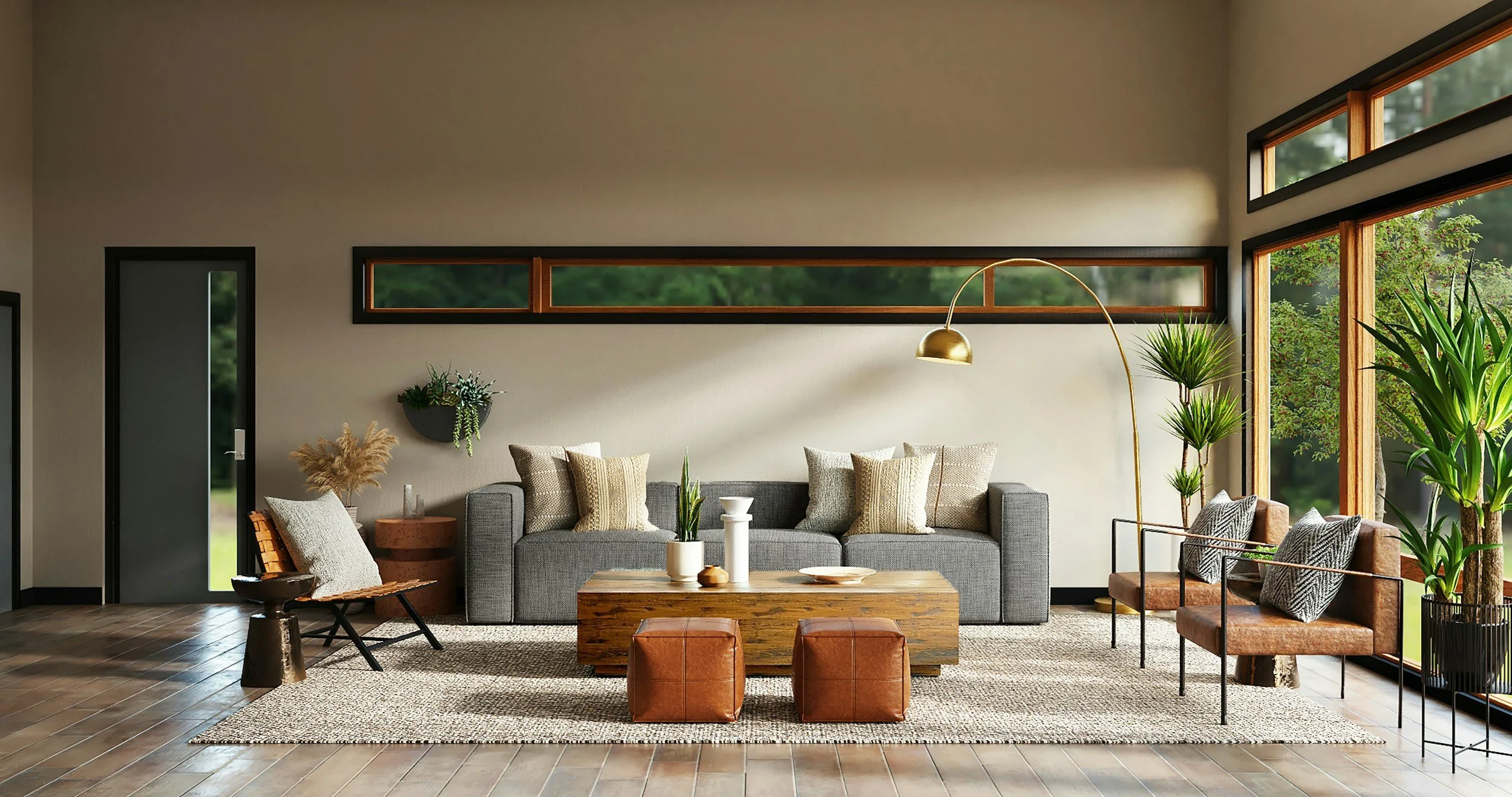
3. Choose Subdued Colors and Grounding Textures
Color is a sensory input, and most living rooms are over-stimulating without anyone realizing it. High-contrast palettes, saturated tones, and visually busy surfaces keep the brain slightly activated — the opposite of restorative.
WELL-informed design favors colors that reduce cortisol rather than spike it. In practice, this means earth tones, muted naturals, and soft neutrals — the palette of the natural world. Think warm stone, dried clay, sage, the pale underside of a leaf. Not flat or cold, but grounded.
Texture matters equally. A living room with smooth, uniform surfaces reads as sterile. Natural materials — linen, wool, raw wood, woven rattan, plaster walls — introduce the kind of sensory variation that the brain finds calming rather than alerting. The body registers these surfaces as familiar, even before the mind does.
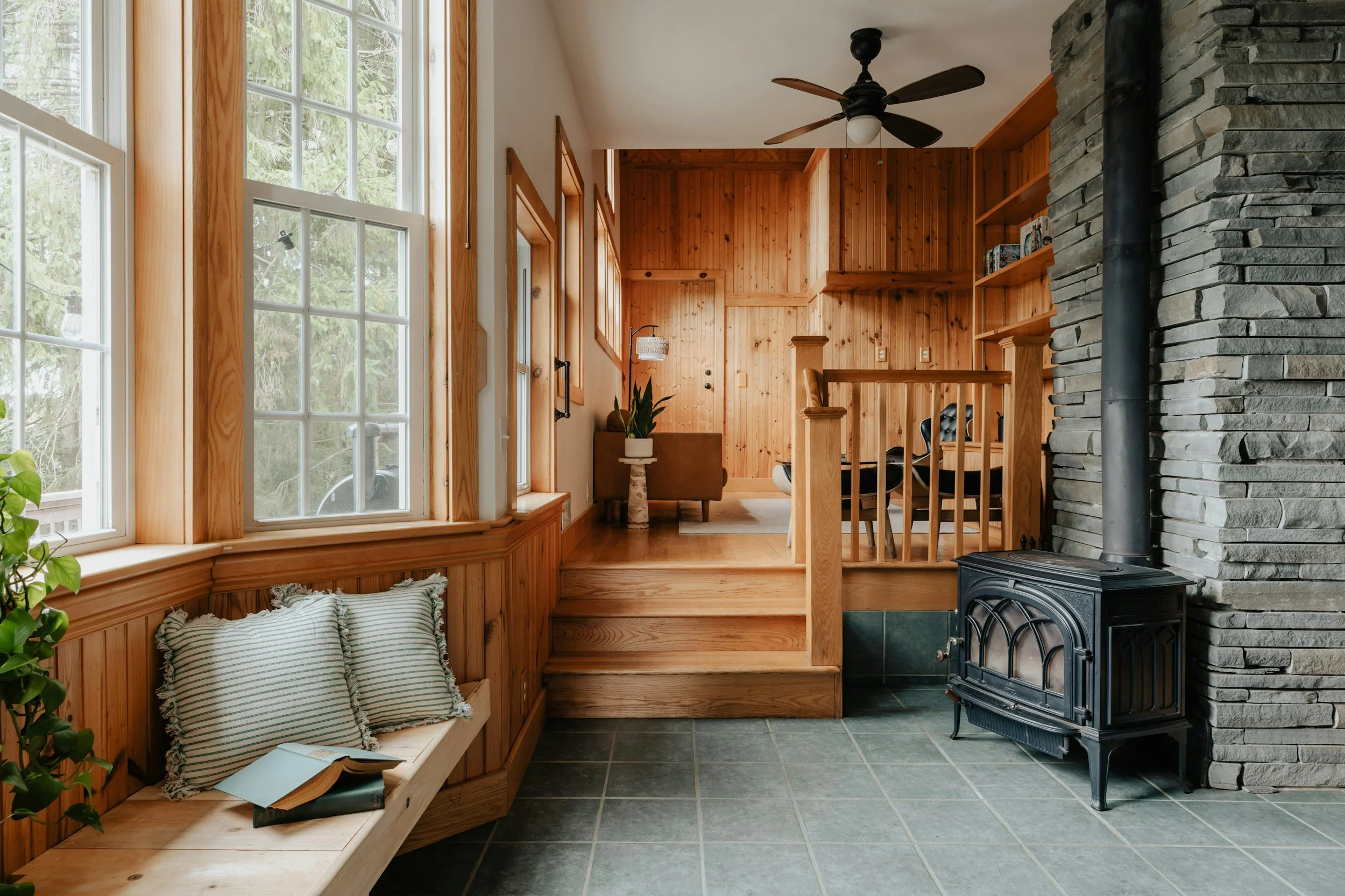
4. Design Seating That Serves Every Body and Every Mode
One of the most overlooked WELL principles in residential design is the idea of adaptable spaces — environments that accommodate a range of users, postures, and activities rather than optimizing for one. A sofa that's perfect for movie-watching is often terrible for reading, working from your laptop, or sitting with a cup of tea and a book.
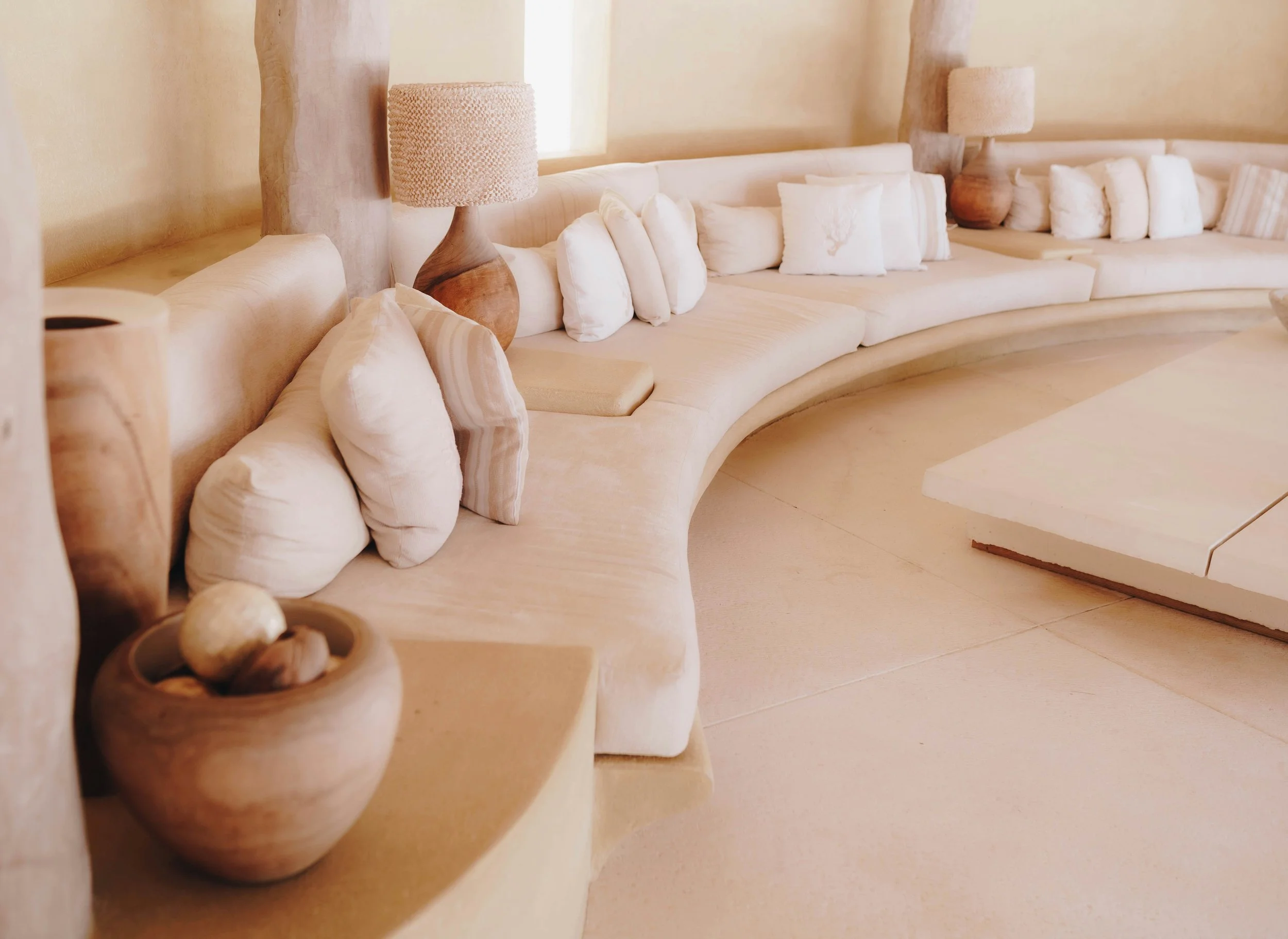
A restorative living room offers options: a deep sofa for full-body rest, an upright chair with good back support for alert activities, floor cushions or a low ottoman for informal moments, and enough clearance between pieces to move freely. Think of it less as a furniture arrangement and more as a range of postures your body can choose between depending on what it needs.
This also means designing for more than one person. A room that only works when everyone sits in the same configuration creates friction — low-grade but constant.
5. Weave in Biophilic Design at Every Scale
Biophilic design goes deeper than plants on a shelf. The WELL Standard defines it as a framework — one that considers how nature is incorporated across environmental elements, lighting, material choices, spatial arrangement, and the overall sensory experience of a room.
In a living room, biophilic design shows up in the curve of a chair leg, the grain of a wood coffee table, the moss green of a linen pillow, the sound of a small indoor water feature. It's the decision to use natural fiber rugs instead of synthetic ones, to let daylight shift across the room throughout the day rather than evening it out with overhead lights, to bring in dried botanicals and stone vessels alongside living plants.
The goal is a room that feels like it belongs to the natural world — not a room with some plants in it.

6. Honor Human Delight Through Art and Personal Meaning
The WELL Standard includes a feature called Beauty and Design — and it explicitly names human delight as a design requirement. Not an afterthought. A requirement.
This is where the most personal work happens. A restorative living room isn't just one that calms the nervous system — it's one that feeds the spirit. Art that genuinely moves you. Objects that carry memory or meaning. A shelf that holds the things you've gathered from places and moments that matter.
These elements aren't decorative extras. Research consistently shows that environments filled with personal meaning reduce stress more effectively than beautiful but impersonal ones. Your living room should know who lives there.
The Living Room Your Body Has Been Waiting For
Designing a restorative living room isn't about following a trend. It's about understanding that your home is an environment — and environments shape bodies, moods, and nervous systems whether you design them intentionally or not.
The WELL Building Standard gives us the research-backed framework. Biophilic design gives us the language of the natural world. And your own life — how you move through a day, what you need when you walk through the door — gives you the blueprint.
That's the space worth building.
At Algae Studio, we design earth-inspired interiors guided by WELL Building Standard principles — for homeowners who are ready for a home that feels as restorative as it looks. Explore our virtual wellness interior design services.
